Tuesday, May 29, 2018

United By Blue embarks on 21 state, waterway clean-up road trip


Earlier this year, I wrote about United By Blue—a sustainable outdoor apparel retailer which is committed to cleaning up a fund of trash for every item it sells. Not long after, we put the word out about summer job opportunities on an upcoming clean up road trip.

Those positions have now been filled, but United By Blue [UBB] is preparing to depart on their 21 state jaunt through the United States, on which they'll be hosting clean ups in communities across the country—and they are going to need your help. Already, more than 10,000 volunteers have participated in UBB clean ups since the brand was conceived, but as they pick up the scale of their efforts, they're going to need to pick up the scale of their volunteer recruiting too.

The goal is not just to initiate one-off clean ups, but rather to strengthen relationships between community groups and build a sustained movement dedicated to caring for our waterways. To that end, UBB will be partnering with local retailers and conservation groups—and will also be seeking to embolden other retailers to hold similar events wherever they are.

Check out the full list of tour locations and dates below, and then sign up to participate here. And in response to the (almost) inevitable comments that this is addressing the symptom, not the cause, I can attest that having become a UBB customer, they're shipping does a pretty darned good job of staying plastic-free.

Blue Movement 2018 Road Trip, Tour Dates and Locations

Richmond, VA
June 1, 2018

Fayetteville, WV
June 4, 2018

Louisville, KY
June 9, 2018

Cleveland, TN
June 9, 2018

Birmingham, AL
June 12, 2018

Jackson, MS
June 15, 2018

New Orleans, LA
June 18, 2018

The Village, OK
June 22, 2018

Ruidoso, NM
June 26, 2018

Flagstaff, AZ
June 29, 2018

Las Vegas, NV
July 1, 2018

Boise, ID
July 11, 2018

Jackson, WY
July 14, 2018

Big Sky, MT
July 16, 2018

Fargo, ND
July 21, 2018

Sioux Falls, SD
July 23, 2018

Omaha, NE
July 26, 2018

W Des Moines, IA
July 28, 2018

Lawrence, KA
July 31, 2018

Urbana, Il
August 3, 2018

Bloomington, IN
August 6, 2018


Bluemovement Road Trip Promo from United By Blue on Vimeo.


from Latest Items from TreeHugger https://ift.tt/2IX6PS8
via IFTTT

Photo: Peregrine versus mockingbird


Our photo of the day proves the moxie of mockingbirds.

Mother bears might be the poster animal for protective parents, but there are plenty of birds that fill the role as well. For instance, consider the mockingbird. Photographer DeeDee Gollwitzer takes remarkable photos of birds of prey, and this one is no exception. She writes:

It's hard to believe the threat of the fastest, leanest, top predator of the skies did not stop this Mockingbird from chasing this female Peregrine Falcon from her nest site! This is a first for me!

The moral of the story? Don't mess with a mama mockingbird.

Would you like to see your nature photo featured as the TreeHugger photo of the day? Join TreeHugger’s Reader Photo Pool on Flickr and add your pictures to the group.


from Latest Items from TreeHugger https://ift.tt/2IUl1Ya
via IFTTT

Canadian government to buy pipeline project from Kinder Morgan for $4.5bn

Dutch support soy transport mega-project, posing major risk to Amazon

Grain silos in Miritituba on the Tapajós River, where soy and other commodities from Mato Grosso state are transferred from trucks onto ships for the trip downriver to the Atlantic coast for export. The Dutch, with their history of infrastructure development, are big backers of the development of Brazil’s Northern Corridor. Image by Karlijn Kuijpers This story is the result of an investigation conducted by Platform Investico, a Dutch collective of investigative journalists. “Brazil and the Netherlands share a special history,” said Brigit Gijsbers, director of maritime affairs from the Dutch Ministry of Infrastructure and Environment, at the start of a speech given in the city of Belém near the mouth of the Amazon River. “For centuries, it was shipping that connected us. Pernambuco, Bahia, Recife and Rio de Janeiro were popular ports of call on the way to the East Indies,” she added in a veiled reference to a time when the Dutch West India Company shipped slaves from Angola to Brazil to work on sugar plantations. It was September 2015, and Gijsbers was in Belém with reps from 13 Dutch companies who wanted to profit from the construction of the Northern Corridor, a mega-infrastructure transportation initiative intended to move soy and other commodities from landlocked Mato Grosso state down the Tapajós and Amazon rivers, to Atlantic ports for export. The Corridor project would require a vast, newly built network of paved roads, railroads, harbors and hydroelectric dams that would need to be hacked through the heart of the…

from Conservation news https://ift.tt/2JdWbpt
via IFTTT

Market Value

I’m going to apologize in advance for what is little more than a rant.  I’ll get back to a more direct presentation of images next time. A few weeks ago I received an e-mail from someone expressing an interest in licensing one or more of my images.  I get requests of this sort from time […]

from Lightscapes Nature Photography Blog https://ift.tt/2kBzzkN
via IFTTT

Lightning strikes and flooding risk as storms continue to hit UK

What does it mean to 'live well'?


The UK's Living Well Index identities four key factors that indicate satisfaction with one's life.

Everyone has their own idea of what it means to live well, but last year a group of social scientists in the UK set out to determine which behaviors and activities are most commonly indicative of a life well-lived. The resulting Living Well Index was revised and published this month for 2018, and it outlines four key factors.

The list is interesting because it deviates from the usual 'shelter, food, employment' list that you might expect to read. It goes beyond survival, digging deeper into the things that actually make us humans feel content with our lives.

1. Sleep quality

The evidence for sleep is starting to roll in, or rather, it's being taken more seriously than it has been for the past several decades. From the report: "The quality of a person's sleep still has the strongest association with wellbeing." Those people who felt rested after sleep "all the time" had a wellbeing score that was 0.93 points higher (all else equal) on a 0-10 scale. Conversely, those who "never" felt rested after sleep reported a wellbeing score 0.51 points lower, controlling for other factors. Sounds like you should prioritize getting to bed on time and not punish yourself for needing a mid-afternoon nap!

2. Sex life satisfaction

The second most important factor for living well is the quality of one's sex life. The researchers found that people in the Young Family category (with children between 0 and 5) had "well-above-average levels of sex life satisfaction." Baby Boomers, by contrast, revealed less satisfaction with their sex lives – "a factor that is strongly negatively associated with age."

3. A sense of having enough time

The third most influential factor in people's perception of wellbeing is feeling like there's sufficient time to accomplish all that needs to happen:

"Those who strongly agreed they had ‘enough time to do everything’ were 8.1 points better off than those who strongly disagreed with this, all else equal... The extent to which people feel that they have enough time to do everything is heavily correlated with age. Three-quarters of the over-65s agreed that they had ‘enough time to do everything’ – a share that dropped to 55 per cent for those aged 55-64, and just 38 per cent for younger adults."

This proves that running around like a maniac, trying to squeeze it all in, isn't good for us; however, if you inhabit the Young Family stage, like I do, it is difficult to imagine anything else.

4. Social eating

Finally, we are better off eating with others, and the more often we do it, the happier and more satisfied we are with our lives. The researchers found that "someone who ‘never’ sits down to eat alone had a living well score 7.9 points higher than someone reporting that they ‘always’ ate their sit-down meals alone."

It's not entirely clear why this makes such a difference to humans, but one professor of psychology, Robin Dunbar, who worked on the Living Well Index, links it to a primal human instinct for companionship:

"The kinds of things that you do around the table with other people are very good at triggering the endorphin system, which is part of the brain’s pain-management system. Endorphins are opioids, they are chemically related to morphine – they are produced by the brain and give you an opiate high. That’s what you get when you do all this social stuff, including patting, cuddling and stroking. It is central to the way primates in general bond in their social groups and relationships.”

After mulling over these four factors, I think they can be summed up in a single phrase: "Slow down!" As soon as humans are able to embrace a slower speed of life, all of these factors fall into place. There's time to sleep, to enjoy great sex, to share a meal with friends, and not do any of it in a mad rush. We could all benefit from allowing the Living Well Index to shape our decisions about how to be.


from Latest Items from TreeHugger https://ift.tt/2IR50WR
via IFTTT

Tracking the Three-Legged Snow Leopard

Nature Conservancy scientists are collaring snow leopards in western Mongolia to help limit livestock predation and protect these rare cats.

from Cool Green Science https://ift.tt/2kBquc5
via IFTTT

Trump administration refuses to consider that 97% of climate scientists could be right | Dana Nuccitelli

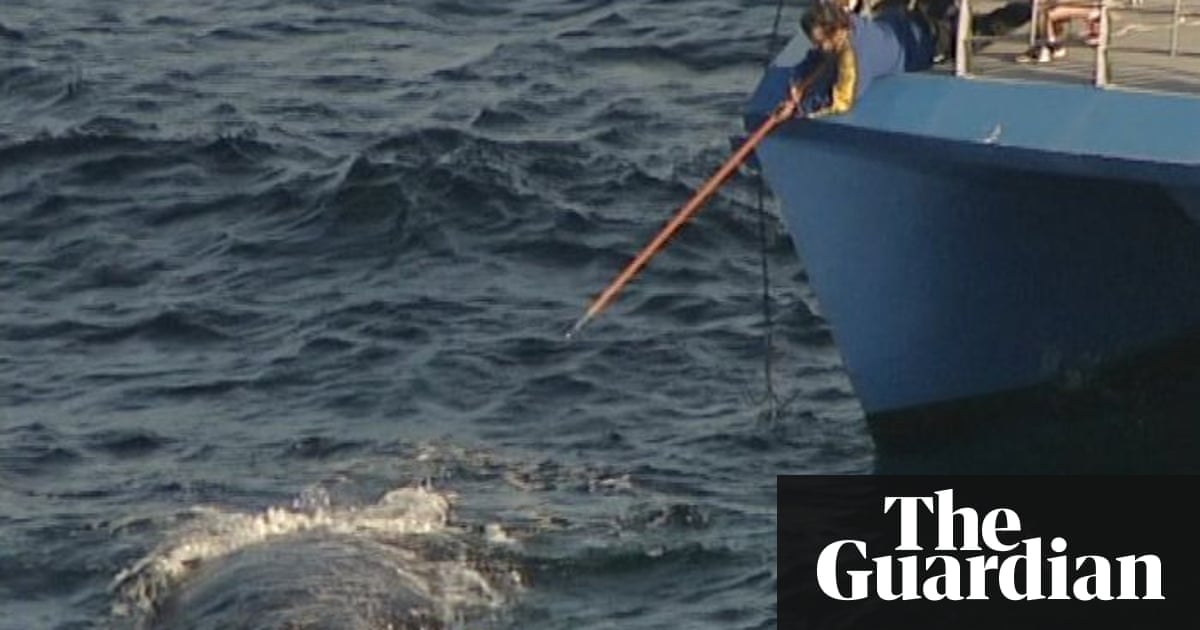
Humpback whale trapped in netting off Bondi beach


A 10-metre humpback whale trapped off in netting off Bondi beach in Sydney may have to wait until Wednesday morning to be freed after darkness hampered rescue efforts.

Whale watchers were able to free the mammal of some of the netting but a rescue team from National Parks New South Wales was unable to fully release the whale before night fell.

Sign up to receive the top stories in Australia every day at noon

Passengers on a whale-watching cruise spotted the mammal about 2pm and spent several hours trying to help. A crew member, Jonas Liebschner, told the Sydney Morning Herald that the whale “was able to move more freely than before” after some of the netting was cut.

The rescue team took over but a spokeswoman told Guardian Australia that it had quickly become unsafe to fully disentangle the whale in darkness.

“The team, before it got dark, was undertaking a visual assessment of the animal by helicopter,” she said. “It is not safe to perform the disentanglement operation by nighttime. It was already too late in the day.”

She said the parks service was mobilising a specialist crew to attempt a disentanglement in the morning if they could locate the whale.


from Environment | The Guardian https://ift.tt/2sdORAO
via IFTTT

National parks are more than natural | Letters

12 ways to get rid of slugs naturally

Get rid of slugs (and snails) without the use of pesticides that harm beneficial creatures and pollute our waterways. from Latest Items f...